Sunday, November 28, 2010

Prejudice Communication?


We all know men and women are as different as night and day, it is hard for either sex to fully understand each other. The opposite sex is generally made the butt of many jokes especially when it comes to the communication styles of either sex. It is common to hear a snide remark about how it is a waste of time to attempt to understand the opposite sex because they are beyond understanding. Communication theory would state that it is not impossible to learn the communication styles of the opposite sex, but rather men and women are different and once you learn the difference in how we communicate you can better communicate in a style that will allow you to be heard.

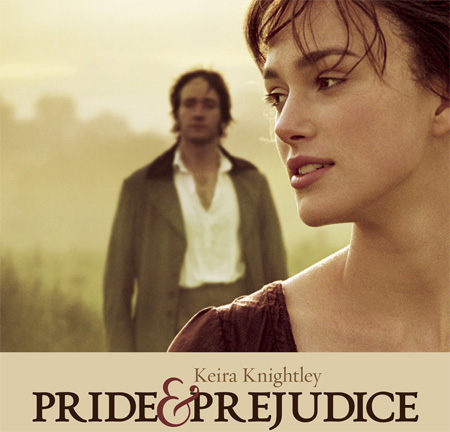
The movie Pride and Prejudice made in 2005 is a great example of the different communication styles of men and women. Communication theorist Julie Wood says that many times women use rapport talking, which is talking to establish a connection with the person you’re talking to. Men often use report talk when in a conversation, which means they talk just to portray the facts, they don’t include extra details or add extra fluff to the conversation. Pride and Prejudice is full of different examples of men and women engaging in their typical communication roles and the occasional switch of the roles.

Mrs. Bennett is probably the greatest user of rapport talk throughout the movie. She never has anything of substance to talk about, much of what she says is about her feelings or her guess about other people’s feelings; she also loves to talk about the smallest, minute details of the parties she has attended or the conquests she has made through her daughters. Mrs. Bennett’s rapport talk is portrayed as silly, embarrassing, and unintelligent (rightly so), but there are a few women engage in rapport talking without sounding like a complete nincompoop. Elizabeth Bennett uses rapport talking with many of the women surrounding her; she uses it with her sisters, her friend Charlotte, and Miss Bingley. Although some of Elizabeth’s conversations with these people do not have much factual substance to them, they are slightly more intelligent the conversations her mother has with the same people.

There are men who engage in rapport talk as well, some are better at it than others; for example, Mr. Bingley uses quite a bit of rapport talk throughout the movie; Elizabeth’s uncle uses rapport talk with her during their excursion about England.

Most of the men in the movie use report talking although they infuse bits of rapport talk when the women are present. Mr. Darcy is the most severe in his conversation style, rarely ever deviating from the report talk. When Miss Bingley tries to engage him in rapport talk about his qualifications for an accomplished women, he states the few facts he believes and Miss Bingley continues for him, including the rapport talk she assumes he meant to add. Even when declaring his love for Elizabeth Bennett he states the facts of why he has tried to suppress his love for so long. Mr. Darcy attempts to use rapport talk at the ball with Elizabeth and it ends awkwardly. Mr. Bennett uses report talk most of the time with his daughters and wife. He humors Mrs. Bennett by not interfering with her rapport talk, and when he tries to gain information from his daughters he strictly uses report talk. He tells Elizabeth that he wouldn’t mind her marrying Mr. Darcy so long as she loves him. His direct talk did not leave room for Elizabeth to gush about her feelings for Mr. Darcy, but rather she responds, “I do love him.” And that is good enough for Mr. Bennett to give his consent for their marriage.

Mr. Wickham and Mr. Collins are men who engage in both styles of communication. Mr. Wickham uses report talk when revealing his past relationship with Mr. Darcy, but he infuses it with just enough rapport talk to taint the narrative to his advantage. Mr. Wickham is able to use report talk with Elizabeth, but he engages in more rapport talk with Lydia and Mrs. Bennett. Mr. Collins uses mainly rapport talk, but when he proposes to Elizabeth he uses almost all report talk, listing the reasons why they should get married.

Lady Catherine de Berg is the only female who engages in report talk only. Lady Catherine is very direct in her words when she is quizzing Elizabeth about her life at Rosings and she wastes no time in telling Elizabeth her reason for calling in the middle of the night. Lady Catherine’s direct language causes Elizabeth to do the same. During her time at Rosings Elizabeth is respectful but just as direct as Lady Catherine in her answers. She does not add any fluff to explain about her family life or how she grew up, but rather states the facts and leave it at that. When Lady Catherine come to call in the middle of the night Elizabeth is extremely direct and does not express her desires or feeling about the rumors of her and Mr. Darcy.

The entire movie of Pride and Prejudice shows great examples of men and women using report talk vs. rapport talk. At times the report talk proved most useful while other times rapport provided more details than a typical report talk conversation would have. While men and women tend to engage in one specific communication style more than the other, it is possible for them to use both, and the more you can engage in both, the better communicator you will prove to be.

Monday, November 1, 2010

Are you ready for Something New?


So we all know how awkward it can be to be set up on a blind date, but what's worse is when that blind date is nothing like you expected at all. The movie Something New for the couple Kenya and Brian their love will have to move beyond the blind date and prove to be truly blind, colorblind that is. Although this movie is a great example of racially mixed couples it is a great example of the tensions that people face in any relationship, especially romantic relationships.

In this movie Kenya McQueen is a hard working African-American young woman, who has found herself moving up in her accounting firm, yet moving downward when it comes to finding love. Brian Kelly is an equally hard working Caucasian man who has rejected societies pressures of making lots of money in exchange for working where his passion is, which happens to be landscaping. Kenya and Brian are set up on a blind date and Kenya immediately rejects Brian because he is white. Through a series of events Kenya hires Brian as her landscaper and Brian becomes determined to transform Kenya and her backyard into something beautiful and exotic, beyond her wildest dreams.

This movie begins with Kenya agreeing to be open to love, but she is hesitant to let Brian be the one she loves because she does not date white guys. Kenya and Brian get to know each other through a series of different events, their first major interaction is when Brian shows up to Kenya’s house unannounced and tells her that they are going to go on a hike. Kenya who does not appreciate nature or the great outdoors is rather skeptical that she will have fun, but while hiking with Brian she begins to relax a little bit and enjoy herself. She begins to open up to Brian and talk to him about her life, which leads to them spending the night together. We find that through the act of intimacy that Brian thinks that he and Kenya are closer to each other than she thinks they are. He begins to ask her questions that she takes offence to, saying “this was a bad idea. You know nothing about me”. Although Kenya tells him to leave and not come back, Brian continues to get to pursue her and get to know Kenya. When they start seeing each other regularly Kenya and Brian engage in what is know in the world of communication theory as relational dialectics. They deal with several tensions that normal couples experience on top of the tension that comes from being an interracial couple. When couples begin to communicate they must deal with tensions within the relationship and from outside the relationship.

One relational dialectic couples must deal with is integration and separation. If one of the qualities takes over too much the relationship will be over. Internally the tension is between connectedness vs. separateness. In the movie Kenya and Brian find that they are connected by doing things together and talking, but they are separated by their racial differences and Kenya’s family. Externally the tension is between inclusion vs. seclusion in a relationship. Kenya tries very hard in the movie to seclude her and Brian’s relationship from her family because she is afraid of what they will think of him. Brian on the other hand strives to be included in every part of Kenya’s life including her family life causing major tension between the couple.

Another dialectic is stability and change. In the movie Kenya is a very stable girl, she keeps everything in order and does not like a lot of change; Brian on the other hand likes to change things up and be spontaneous. These qualities balance each other out quite well in the movie. Within the relationship couples must deal with the tension of certainty vs. uncertainty; and in the movie Brian and Kenya’s relationship is more on the uncertain end of the spectrum. As the relationship progresses Brian become more certain of the relationship while Kenya continues to be uncertain causing her to start seeing someone on the side. An external tension couple face is the idea of conventionality vs. uniqueness. In the movie this tension is expressed by Kenya but has repercussions on Brian and the relationship. She feels the tension of her family and friends to stay in the conventional same race relationship, which is made clear once Kenya starts dating Brian and her family introduces her to an eligible black man and elude to him the rest of the movie. Although there is that tension, there is the tension of the uniqueness of Kenya and Brian’s relationship and the bond they share despite what external forces are saying. In the end of the movie Kenya decides that she doesn’t mind being different, so long as Brian is with her.

The final relational dialectic is expression and nonexpression. Within the relationship there is the tension of being open vs. closed in the relationship. The climax of Kenya and Brian’s relationship is when they are at the grocery store and Kenya is venting about her frustrations of being black. She saw it as an opportunity to be open, while Brian perceived it as a moment that she should have been closed with her feelings. Kenya states, “Well, when is a good time to be open with you? When is it convenient for you for me to express my feelings?” This tension of the relationship becomes too great and causes them to separate until the end of the movie. The external tension derived from this dialectic is revelation vs. concealment. At the beginning of the movie Kenya did not want it to be known that she was with a white man. When she discovers that Brian is the person she is to go on the blind date with, she becomes very uncomfortable and through her verbal and non-verbal skills tries to let the people around her know that she was placed into the situation involuntarily. At the end of the movie, Kenya is willing to reveal her relationship and feeling for Brian and she doesn’t mind what those around her may think about it.

Something New is a great movie about relationships, whether they are romantic, familial, or friendships. It also provides great insight to the pressures many interracial couples face in society today. It is definitely a movie I would suggest for anyone black or white, male or female.